

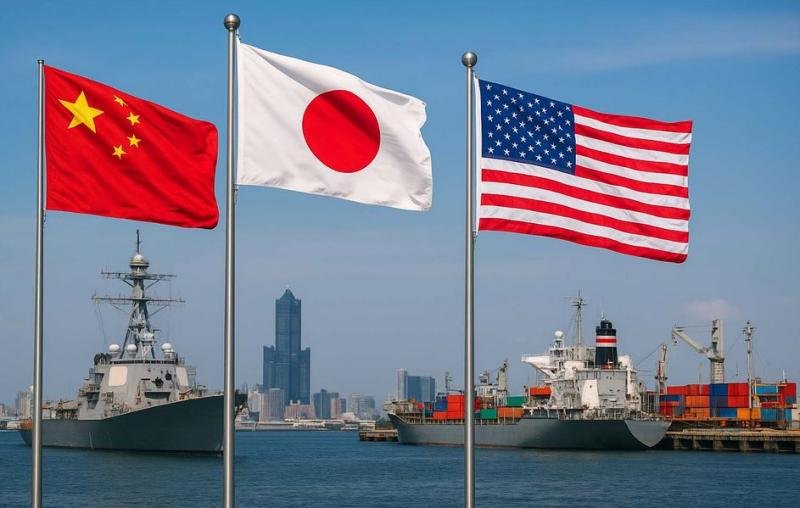


Tokyo. Geopolitical tensions in East Asia have deepened as Japan’s plans to deploy a medium-range surface-to-air missile unit on the southern island of Yonaguni intensified. On Sunday, Japanese Defense Minister Shinjiro Koizumi visited this military base, just 110 kilometers from Taiwan, and said clearly, “This deployment will reduce the probability of attack, not increase it.” Koizumi’s statement comes amid increasing bitterness over the Taiwan dispute between China and Japan, where the US is also putting economic and military pressure on Taiwan. Japan considers Yonaguni a strategic link in its southern island chain, which is important for the security of the Taiwan Strait.
Japan has already deployed anti-ship missiles on Ishigaki Island and aerial surveillance systems on Miyako. Koizumi stressed that Japan and the United States must jointly strengthen deterrence capabilities because “this is the most serious security scenario since World War II.” He dismissed fears of escalating regional tensions, saying the missiles would ensure the defense of Yonaguni. The plan has been in place since 2016, when a Self-Defense Forces base was established on the island, despite initial opposition from local residents. Why has China grown angry? Japanese Prime Minister Sanae Takaichi recently said that Japan could join military action with other countries in the event of a Chinese attack on Taiwan. China expressed strong objection, calling it a “provocative” statement. Chinese Foreign Ministry spokeswoman Mao Ning said on Monday, “This missile deployment is a deliberate attempt to stoke regional tensions and provoke military confrontation. Coupled with Takaichi’s false statements, this is an extremely dangerous trend.” Beijing has stepped up economic pressure on Japan, accusing it of “conservative thinking,” such as a ban on Japanese seafood. Taiwan openly supported Japan. Vice Foreign Minister Francis Wu said, “Japan is a sovereign nation and can take measures to protect its own security. It will maintain stability in the Taiwan Strait.” According to Japanese media, some local residents are concerned about the deployment, as it could put them at the center of a geopolitical conflict.
America’s new pressure on Taiwan. On the other hand, US President Donald Trump is putting strong pressure on Taiwan on chips, tariffs and defense budget issues. Trump wants Taiwan to transfer 50 percent of its semiconductor production to the US, which Taiwan is calling “impractical”. Taiwan has the world’s most advanced chip ecosystem, while the entire industry in the US has not been developed. Experts estimate such a large shift could take more than a decade. In April 2025, Trump imposed 32 percent tariffs on Taiwan, which is higher than allies like Japan and South Korea. It was reduced to 20 percent in August, but 50 percent tariff on steel-aluminium remains intact. Taiwanese industrialists are worried that sectors such as textiles, machine tools and bicycles will be affected.