


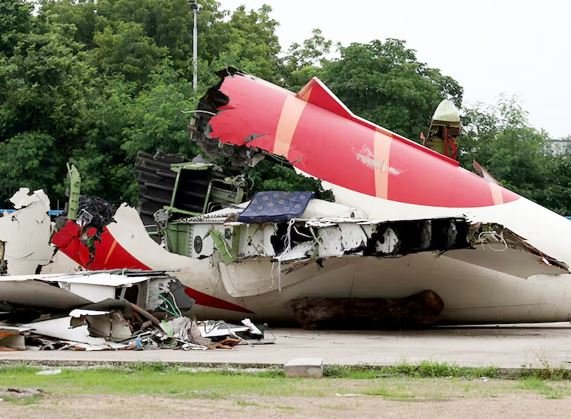
Ahmedabad. A new and sensational turn has come in the investigation of the Air India Boeing 787 plane crash that took place in Ahmedabad on June 12, 2025 last year. A recent whistleblower report presented in the US has completely rejected the initial claims in which pilot Captain Sumeet Sabharwal was held responsible for this horrific accident. Earlier it was said that the pilot had inadvertently closed the fuel control switches, causing the plane to crash. However, America’s organization Foundation for Aviation Safety (FAS), while presenting evidence before the Permanent Investigation Subcommittee of the US Senate, has claimed that the roots of this accident were hidden in the old and serious technical flaws of the aircraft.
According to the report, the pattern of attributing pilot error in the initial investigation is similar to that seen during previous crashes of the Boeing 737 Max, in order to hide the company’s manufacturing flaws. Quoting documents, it has been told in the report that this Boeing 787 aircraft of Air India, which was the victim of the accident, was suffering from technical problems since the first day of its service. Records show that complaints of system failure started being registered from the day it reached India on 1 February 2014. The FAS claims that during its 11 years of service, the aircraft continued to have serious engineering, manufacturing and quality control deficiencies.
The report gives a long list of technical failures that the aircraft repeatedly suffered from. These mainly include electronic and software malfunctions, sudden tripping of circuit breakers, wiring damage, short circuits and overheating of power system parts. The organization revealed that in January 2022, there was a fire in the primary power panel of this aircraft, which caused heavy damage to the main wiring. Just three months later, in April 2022, the plane was prevented from flying for several days due to a landing gear indication system failure.
Experts conducted an in-depth analysis of approximately 18 percent of the Boeing 787 fleet, studying more than 2,000 system failure reports. This analysis revealed that incidents such as power outages and smoke or odor were not limited to this one aircraft, but were also observed in other aircraft of the same model registered in the US, Canada and Australia. In such a situation, it has been concluded that the accident was not the result of any human error, but was the culmination of long-standing complex technical problems within the aircraft.
On the other hand, after this serious report became public, questions are being raised on the stance of aircraft manufacturer Boeing. The company spokesperson, instead of making any direct comment on these claims, has only said that they will rely only on the official investigation being conducted by India’s Aircraft Accident Investigation Bureau (AAIB) under international rules. However, this whistleblower report has sparked a new debate on global aviation safety standards and the accountability of companies. Now all eyes are on the next step of the Indian government and international aviation regulators to see whether they change the direction of the investigation after this new revelation.