

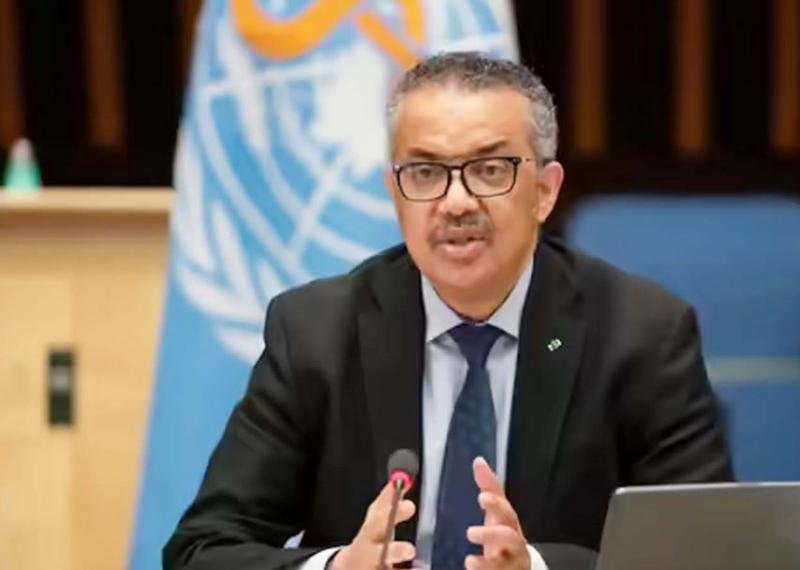

Geneva. The World Health Organization (WHO) has warned that cuts in international aid and continued shortages of financial support are weakening the global health system. WHO Director-General Dr. Tedros Adhanom Ghebreyesus has said that this situation is even more serious, because the risk of epidemics, drug-resistant infections and the fragility of health services is continuously increasing.
According to media reports, Dr Tedros, while addressing the meeting, said that due to a huge cut in financial support last year, the health organization had to reduce its workforce, which has had serious and far-reaching implications. The UN health agency has warned that sudden, massive cuts in bilateral aid are posing challenges to health systems and services in many countries. Dr Tedros described the year 2025 as “one of the most difficult years” in the history of the World Health Organization. He said WHO’s life-saving work continues, but the financial crisis has exposed existing weaknesses in global health operations, particularly in low- and middle-income countries that are struggling to maintain essential health services.
According to Dr Tedros in the report, the financial crisis at WHO is part of a wider reduction in financial support for international health, which is forcing countries to make difficult decisions. In response to financial cutbacks, WHO is helping many countries maintain essential health services and move from aid dependence to self-reliance, he said. For this, emphasis is being laid on mobilizing domestic resources including increasing health ‘tax’ on tobacco, alcohol and sugary beverages. According to the UN Health Agency, 4.6 billion people still lack access to essential health services, while 2.1 billion people are facing financial difficulties due to health expenses. There is also an estimated shortage of 11 million health workers worldwide by 2030, of which more than half are nurses.
As a result of these reforms, WHO has secured about 85 per cent of the resources needed for its original budget in 2026-27, but he warned that remaining funding will be difficult to mobilize, especially given global financial conditions. He warned that serious shortfalls remain in areas such as emergency preparedness, drug resistance and resilience to climate change, putting these priorities at risk and preventing needed resources from being available.
Dr Tedros warned that 1 in 6 bacterial infections worldwide are now resistant to antibiotics, and this trend is accelerating in some regions. He said that the Covid pandemic has taught us many lessons…especially that dealing with a global threat requires a global response. Unity is the best security. He warned that if financial resources are not predictable and adequate, the world could be less prepared for the next health crisis. This is your WHO. Its power lies in your unity. Its future is your choice.