


Hearing will be held from April 7
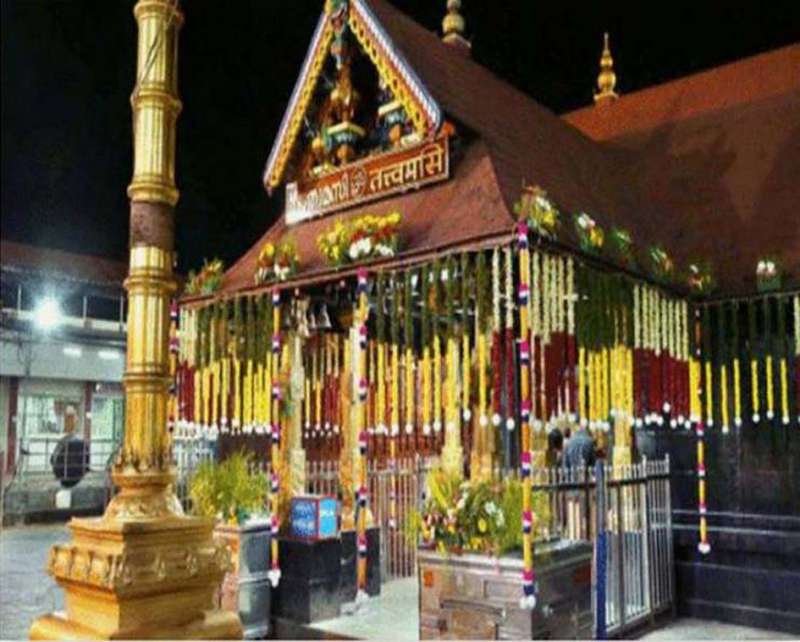
New Delhi. A 9-judge bench of the Supreme Court will begin hearing cases on discrimination of women at religious places from April 7. This case will mainly focus on issues related to Sabarimala temple in Kerala. The Supreme Court has ordered that all parties submit their written arguments by March 14. On behalf of the Centre, Solicitor General Tushar Mehta said that he supports the review of the Sabarimala verdict. The bench comprises Chief Justice Surya Kant, Justice Joymalya Bagchi and Justice Vipul M Pancholi.
During the hearing, the Supreme Court has appointed senior advocates Parmeshwar and Shivam Singh as amicus curiae, to provide necessary guidance to the court and analysis of the arguments of the parties. The court has also directed that the hearing will be completed by April 22. Krishna Kumar Singh has been appointed nodal counsel for the parties supporting the review of the Sabarimala decision, while Shashwati Pari has been appointed nodal counsel for those opposing the decision.
Political turmoil increased before the hearing
This issue has come up again because the Supreme Court is going to consider the review and writ petitions related to the 2018 decision on Monday. In that decision, women of all ages were allowed to enter the temple of Lord Ayyappa. Opposition Congress says that the government should clearly explain its stand to the public before going to court. He alleges that the government is still in a state of confusion on this sensitive issue. On May 11, 2020, the Supreme Court had said that a five-judge bench can refer questions of law to a larger bench under limited review powers. The 2018 Sabarimala verdict had allowed entry of women of all ages into the temple. The Supreme Court has also framed seven key questions on religious freedom and the scope of Articles 25 and 26 of the Constitution. It also clarified whether the practices of a religious group or sect can be challenged by any other person through a PIL (Public Interest Litigation). Apart from the Sabarimala case, the bench has also referred to a larger bench the issues related to entry of Muslim women into mosques and dargahs and entry of Parsi women into Agiyari (sacred fire place).