

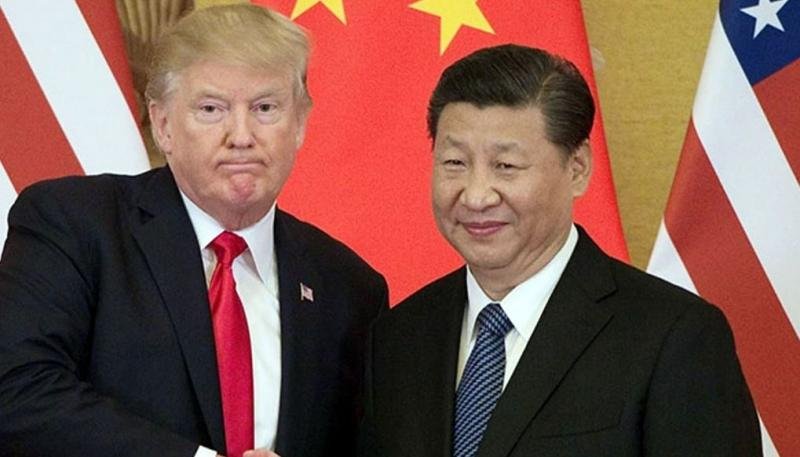


Washington. US President Donald Trump has turned to China after failing to improve relations with Russia. After failing to isolate Putin, Trump has expressed his desire to meet Chinese President Xi Jinping before his Asia tour. Although this meeting has not been finalized yet, the ongoing trade talks in Malaysia are showing positive signs. Trump’s move is aimed at ending the US-China trade war and restoring regional stability, where Russia-China proximity remains a challenge for US diplomacy.
Trump’s six-day Asia tour began on Saturday from Malaysia, where he is attending the summit. This will be followed by visits to Japan and South Korea, where Xi Jinping is expected to hold a bilateral meeting on October 30 on the sidelines of the APEC summit. White House Press Secretary Caroline Leavitt confirmed that the meeting could take place in Gyeongju or Busan, South Korea. “I think we’ll make a great deal with China,” Trump told reporters on Air Force One. The tour is Trump’s first visit to Asia in his second term, focusing on issues such as trade, security and North Korea.
Ahead of the Trump-Xi meeting, very constructive trade talks were held between the US and China in Malaysia on Saturday. A US Treasury Department spokesperson said the two sides had a good discussion at Malaysia’s Merdeka 118 (the world’s second tallest building), which will continue the next day. US Treasury Secretary Scott Besant met with Chinese Vice Premier He Lifeng, where tensions between the world’s two largest economies came up. The main issues were: Chinese ban on export of rare earths, agricultural procurement, TikTok, fentanyl and bilateral trade. Besant said, we have created a successful framework for the leaders’ meeting. US Trade Representative Jameson Greer told reporters in Kuala Lumpur that the talks were wide-ranging, including discussing extending the tariff truce until November 10. China’s Ministry of Commerce confirmed that He Lifeng is in Malaysia from 24–27 October. These are the fifth round of talks, which are an effort to reduce tensions arising from the US blacklist extension and Chinese sanctions in September. If successful, 100% tariff avoidance is possible, which would be a relief to American industries.
The Trump administration is trying to separate Russia from China, but the closeness of Putin-Xi made it difficult. Despite the Trump-Putin Saudi Arabia meeting in February 2025 and the Alaska summit in August, Russia did not make any major compromise in the Ukraine war. China called Putin a true friend and proposed a Trump-Putin summit to end the war. Experts believe that Trump’s reverse Nixon strategy (isolating Russia from China) is failing, because Beijing-Moscow relations are strong. Trump said he wanted to improve relations with Russia, but Putin’s insistence on Ukraine hindered. Now by asking for help from China, Trump is hoping that Xi will mediate. In South Korea, Trump has also expressed his desire to meet North Korean leader Kim Jong Un, which will be important for regional peace. Trump has already made it clear that he wants to end the trade war with China. Many of our doubts and questions will be resolved, he said. If the meeting is successful, it will lead to investment deals for the US and progress in peace efforts. However, experts are warning that if tariff tensions escalate, global supply chains will be affected. Countries like Malaysia, Vietnam may benefit from this, but the risk will increase if failure occurs.