

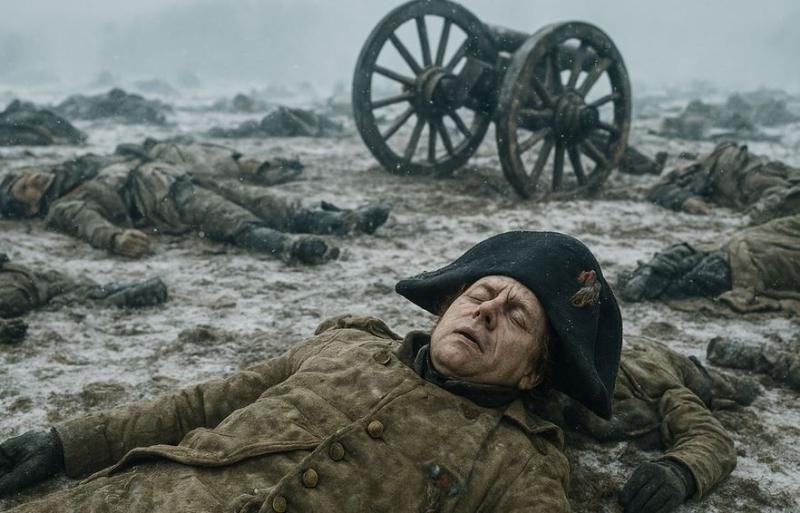


London . When Napoleon Bonaparte ordered the retreat of his huge army from Russia in October 1812, it proved disastrous for them. Nearly three lakh soldiers died battling snow, hunger, exhaustion and disease. For a long time it was believed that severe cold and hunger were the main reasons for this devastation, but a new study that has recently come out has reopened this page of history. Scientists have found through DNA analysis that bacteria spread by lice and diseases caused by contaminated food also played a big role in the death of these soldiers. This research was led by Nicolas Raskoven, head of the Microbial Palaeogenomics Unit of the Institut Pasteur, and his team. They tested DNA on teeth from soldiers of Napoleon’s Grand Army from a mass grave found in the city of Vilnius, Lithuania.
Studies conducted decades ago had hinted at diseases such as typhus and trench fever, but the modern “shotgun sequencing” technology used this time allowed a more in-depth investigation. With the help of this technique, scientists were able to identify DNA fragments that matched 185 types of bacteria that cause disease in humans. Research has found that a soldier’s teeth contained traces of a bacteria called Borrelia recurrentis, which causes “relapsing fever” spread by lice.
Four other soldiers were found infected with a strain of Salmonella enterica bacteria, which causes paratyphoid fever. This disease spreads through consumption of contaminated water or food. The team believes that one of these four soldiers could have had both the diseases simultaneously. These results match historical accounts of soldiers suffering from complaints such as fever, diarrhea and weakness. Researchers said that in previous studies, there were indications of bacteria causing typhus or trench fever, but this time no such evidence was found. They believe that this could be because either the soldiers were not infected with these diseases or the infection was very mild, whose DNA presence has now been erased. There is also a possibility that the DNA may have degraded due to being buried in the soil for so many years or its quantity in the samples may have been so low that the technology could not detect it.
The team conducted several statistical tests and genetic analyzes to confirm their findings. They also examined whether the DNA actually came from an ancient source and where it was located in bacterial evolution. The study said that the real cause of death of these soldiers was not just cold or fatigue, but it was the combined effect of many factors including extreme cold, hunger, paratyphoid fever, relapsing fever and lice-borne diseases. Although relapsing fever caused by lice was not fatal in itself, it proved fatal for the already weak and hungry soldiers.