

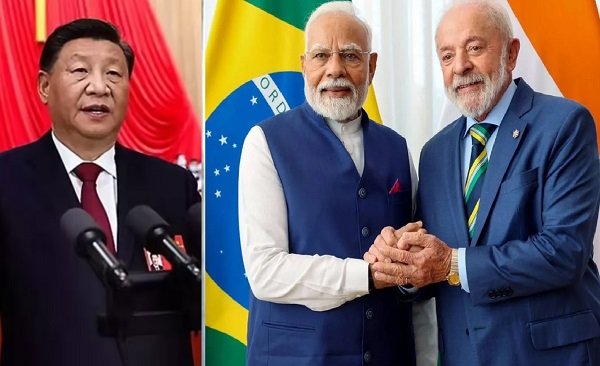

New Delhi . India and Brazil signed a historic trade deal on Saturday. After the meeting between PM Narendra Modi and Brazilian President Luiz Inacio Lula da Silva, both the countries signed an agreement for cooperation in essential minerals and steel supply chain. This step is being considered a big step towards reducing China’s arrogance, because China controls 70 to 90 percent of the mining and processing of rare earth minerals in the world.
Under this deal, India and Brazil set a target of annual bilateral trade of US $ 30 billion by 2030. Prime Minister Modi said that the important minerals agreement with Brazil can reduce dependence on China and will help in building a strong supply chain.
A total of 9 agreements were signed after the talks between the two leaders. These include important agreements like cooperation in the field of rare earth minerals and creating digital partnerships for the future.
Union Commerce and Industry Minister Piyush Goyal said that Brazil has important mineral resources like niobium, lithium and iron ore, while India has strong technology and manufacturing capacity. By combining these resources and technology, the global supply chain can be further strengthened.
Apart from this, both the countries also discussed opportunities to enhance cooperation in the areas of agriculture, aerospace, automobile and digital technology. Brazilian companies were invited to invest and partner in India.
Under the agreements, NMDC, Vale and Adani Gangavaram Port have agreed to set up an iron ore blending facility at a cost of approximately $500 million. Agreements were also signed in the pharmaceutical sector for joint research and production of medicines for cancer and other serious diseases. In the aerospace sector, Brazil’s Embraer and Adani Defense and Aerospace signed an agreement to set up an assembly line for the E175 regional jet in India.
PM Modi and President Lula also stressed the need to protect the interests of developing countries in the global economic system and ensure a level playing field in intellectual property rights. This deal will strengthen India’s strategic position and reduce its dependence on China, while further increasing opportunities for trade and technological cooperation between the two countries.