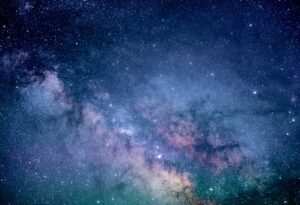

Astronomers have unveiled a breathtaking new image captured by the Hubble Space Telescope, showcasing a mysterious cosmic structure nicknamed the “Evil Eye” galaxy. The image, released in March 2026, has captivated both scientists and space enthusiasts with its striking appearance resembling a glowing eye staring into the universe.
🌌 What Is the “Evil Eye” Galaxy?
The galaxy, formally known as NGC 4826, lies approximately 17 million light-years away in the constellation Coma Berenices. It earned its nickname due to a dark band of dust that appears to obscure part of its bright core, creating an eerie “eye-like” visual effect.
In the latest Hubble image, enhanced resolution reveals:
- A bright, glowing central core
- A distinct dark ring of cosmic dust
- Swirling outer arms filled with young, blue stars
- Subtle color variations indicating different stellar populations
🔹 Why This Image Matters
Scientists are particularly interested in NGC 4826 because it exhibits unusual rotational behavior:
- The inner region of the galaxy rotates in one direction
- The outer gas disk rotates in the opposite direction
This rare phenomenon, known as counter-rotation, suggests the galaxy may have merged with another galaxy in the past, offering clues about galactic evolution and cosmic collisions.
Dr. Elena Ruiz, an astronomer involved in the study, noted:
“This galaxy is a cosmic puzzle. Its structure tells a story of past interactions that we’re still trying to fully understand.”
🌠 Advanced Imaging Techniques
The Hubble Space Telescope used its Wide Field Camera 3 (WFC3) to capture the image across multiple wavelengths, including visible and near-infrared light. This allowed astronomers to:
- Penetrate dust clouds and reveal hidden structures
- Identify regions of active star formation
- Map the distribution of gas and stellar populations
The result is one of the most detailed images ever taken of the “Evil Eye” galaxy.
🔹 Public Reaction
The image quickly went viral across social media:
- “Looks like the universe is watching us!”
- “One of the most hauntingly beautiful galaxy images ever.”
- “Hubble never disappoints — this is stunning.”
Astronomy communities praised the image for both its scientific value and visual impact, highlighting how space imagery continues to inspire curiosity and wonder.
📅 Looking Ahead
Researchers plan to use upcoming observations from the James Webb Space Telescope to further analyze the galaxy’s dust structure and star formation activity. Combined data from Hubble and Webb could unlock deeper insights into how galaxies grow, merge, and evolve over billions of years.
🌍 Final Thoughts
The “Evil Eye” galaxy serves as a reminder of the beauty and mystery of the universe, where even distant cosmic objects can appear strikingly familiar. Thanks to Hubble’s continued observations, humanity gets a front-row seat to the wonders of deep space, revealing stories written across millions of light-years.