For decades, the hospitality industry has celebrated the idea of the “star chef”—a highly skilled individual capable of transforming any kitchen into a successful operation. While talent is undeniably important, modern culinary environments are proving that this belief is increasingly outdated.
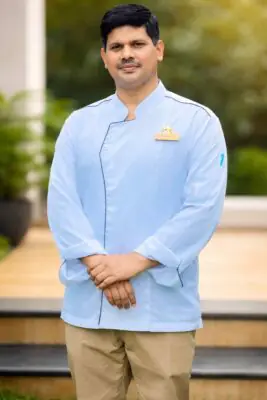
Chef Mahesh Mahto, an Executive Chef and operational strategist, challenges this traditional mindset. His experience across high-volume kitchens has shown a consistent pattern: kitchens that depend on individuals struggle to scale, while those built on systems maintain stability even under pressure.
The Problem with Talent-Dependent Kitchens
At first glance, a talented chef seems like the ultimate asset. They can innovate, adapt, and deliver high-quality dishes quickly. However, the issue arises when the entire kitchen begins to depend on that one person.
When such individuals are absent, performance drops instantly. Recipes lose consistency, timing becomes irregular, and quality fluctuates. This creates an unstable environment where success is tied to availability rather than structure.
Chef Mahto describes this as a “fragile excellence”—impressive in moments, but unreliable over time.
What System-Driven Kitchens Look Like
In contrast, system-driven kitchens operate on defined frameworks rather than individual memory or improvisation. These systems include:
- Standardized recipes with measurable outputs
- Defined prep schedules for every station
- Clear communication hierarchies
- Documented workflows for service execution
- Quality checkpoints at multiple stages
In such kitchens, even new or less experienced staff can maintain consistent output because the system guides them.
Removing Guesswork from Operations
One of the biggest sources of inconsistency in kitchens is guesswork. When procedures are not clearly defined, staff make assumptions. These assumptions vary from person to person, leading to uneven results.
Systemization removes this uncertainty. Every task has a defined method, timing, and expectation. This reduces cognitive load and improves execution speed.
Chef Mahto emphasizes that the goal is not to restrict creativity but to stabilize fundamentals. Creativity works best when the foundation is predictable.
Scaling Without Losing Quality
As restaurants expand, maintaining consistency becomes increasingly difficult. A single kitchen can rely on experienced chefs, but multiple locations cannot depend on the same individuals.
This is where systems become essential. They allow businesses to replicate success across different teams and locations without losing identity or quality.
Without systems, expansion often leads to dilution of standards.
Training as a System, Not an Event
In many kitchens, training is treated as a one-time activity. New staff are shown how things work and expected to adapt quickly. This approach leads to inconsistency and repeated errors.
Chef Mahto argues that training should be continuous and system-based. This includes:
- Step-by-step onboarding modules
- Visual guides for preparation
- Repetition-based skill reinforcement
- Regular performance evaluation
When training is structured, performance becomes predictable.
Leadership in System-Driven Kitchens
Leadership also changes in a structured environment. Instead of constantly solving problems, leaders focus on maintaining systems.
Their role becomes:
- Ensuring standards are followed
- Identifying weak points in workflow
- Updating processes based on feedback
- Supporting team alignment
This reduces operational chaos and improves efficiency across the board.
Emotional Stability in Operations
One overlooked benefit of system-driven kitchens is emotional stability. In talent-dependent kitchens, pressure often falls on a few individuals, creating stress and burnout.
In structured kitchens, responsibility is distributed. Teams function collaboratively, reducing emotional strain and improving long-term sustainability.

Conclusion
Chef Mahesh Mahto’s philosophy highlights a major shift in modern hospitality: success is no longer defined by individual brilliance alone. Instead, it depends on how well a kitchen is designed to function without uncertainty.
Systems do not replace talent—they support it. And in today’s fast-moving culinary world, that support is what keeps kitchens stable, scalable, and successful.
Media Coverage & External Links
Read the full feature:
Interview:
Also featured in The Literature Times:
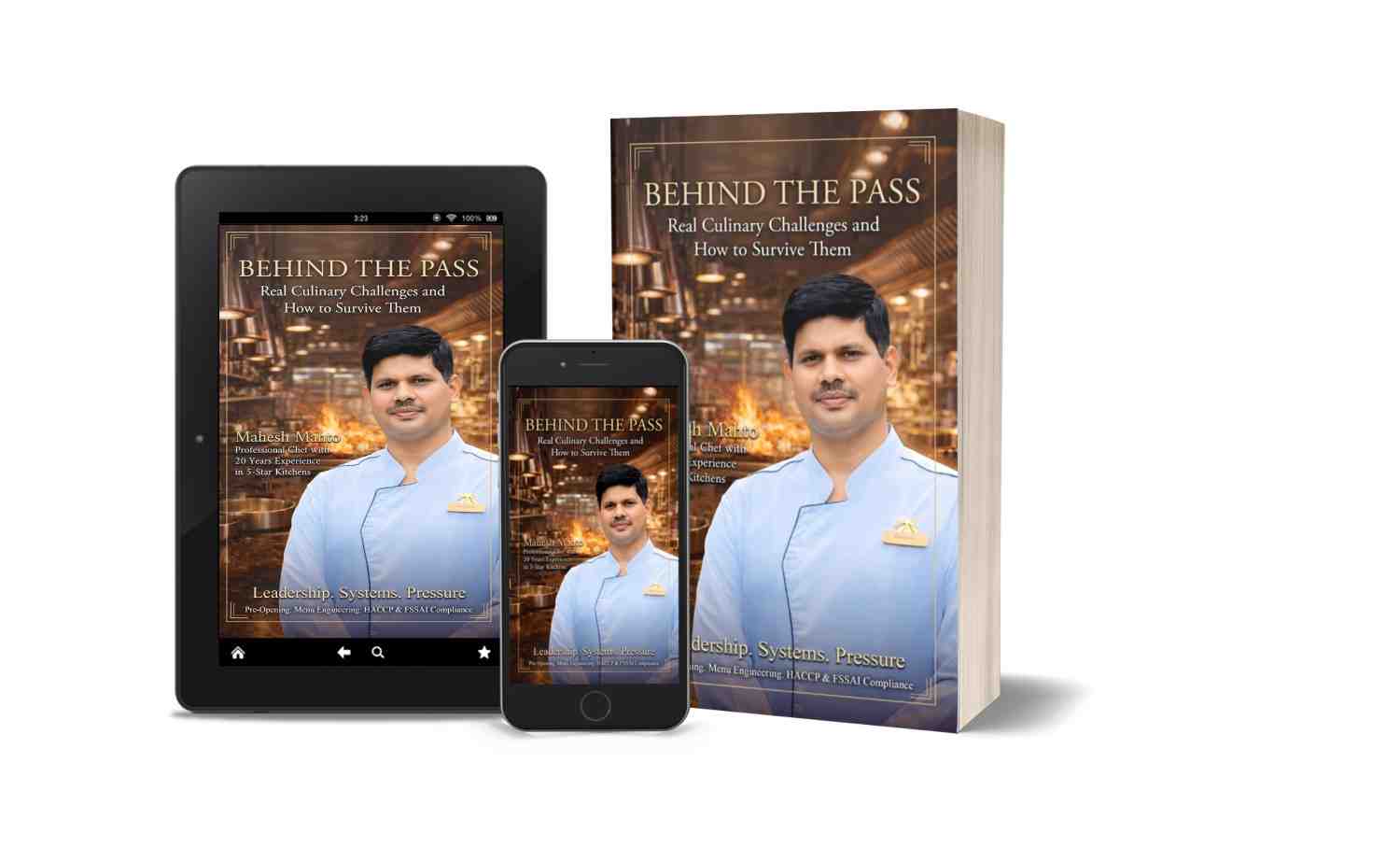
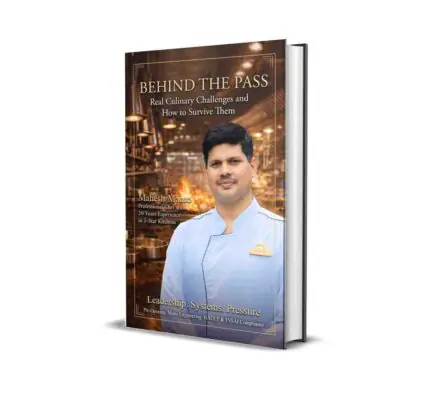
Get Your Copy
The pass is open.
- Amazon — https://lnkd.in/gh__9vkJ
- Flipkart — https://lnkd.in/gVcFjHTa
- Astitva Store — https://lnkd.in/gpmc_vpp
- Classic Shelf — https://lnkd.in/g7_k4TpW