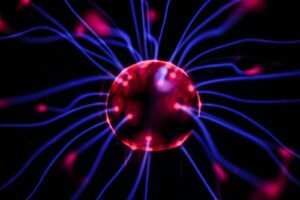

Static electricity—an everyday phenomenon that causes hair to stand on end or sparks when touching metal—has puzzled scientists for centuries. Now, new research is finally shedding light on the fundamental mechanisms behind this mysterious force, offering insights that could transform multiple fields of science and technology.
Understanding a Familiar Yet Complex Phenomenon
Static electricity is commonly explained through the concept of Electrostatics, where electric charges build up on the surface of materials. While this basic explanation has been understood since ancient Greek times, the detailed processes governing how and why charges transfer between materials have remained unclear.
Recent studies using advanced microscopy and material analysis techniques have revealed that static charge transfer is far more complex than previously thought. Instead of a simple exchange of electrons, researchers found that microscopic material fragments—sometimes even at the nanoscale—play a key role in charge movement.
The Role of Contact and Separation
The new findings focus on a process known as Triboelectric Effect, which occurs when two materials come into contact and then separate. This is the same process responsible for the shock you feel after walking on a carpet and touching a metal object.
Scientists discovered that when materials touch, tiny regions on their surfaces interact unevenly. Upon separation, these regions can exchange not only electrons but also bits of material, leading to unpredictable charge distributions.
This helps explain why static electricity can behave inconsistently—sometimes producing strong sparks and other times barely noticeable effects.
Breakthrough Tools and Techniques
To uncover these insights, researchers used cutting-edge imaging tools capable of observing interactions at the atomic level. By analyzing how different materials behave under controlled conditions, they were able to track the exact pathways of charge transfer.
The study also incorporated computational models to simulate interactions across various surfaces, helping scientists identify patterns that were previously invisible.
Practical Implications
Understanding static electricity at a deeper level could have wide-ranging applications. In industries such as electronics manufacturing, static charge can damage sensitive components. Improved knowledge could lead to better anti-static materials and safer production environments.
In energy research, scientists are exploring ways to harness static electricity through triboelectric nanogenerators—devices that convert mechanical motion into electrical energy. These could power small electronics or sensors in the future.
The findings may also impact fields like materials science, aerospace engineering, and even environmental monitoring, where static charge plays a role in particle behavior.
A Step Toward Solving an Ancient Puzzle
Despite its everyday presence, static electricity has remained one of the least understood aspects of physics. This new research represents a major step forward, providing a clearer picture of the microscopic interactions that drive the phenomenon.
While questions still remain, scientists are now closer than ever to fully understanding how static electricity works—and how it can be controlled or even harnessed.
As research continues, this once-simple curiosity could become a key component in next-generation technologies, proving that even the most familiar phenomena can hold surprising secrets.