New Method May Finally Resolve the Universe’s Expansion Rate Debate

New Method May Finally Resolve the Universe’s Expansion Rate Debate

te centers on different ways of measuring how fast the universe is expanding. One method looks at the early universe using data from the Planck Mission, while another measures distances to nearby galaxies using exploding stars and variable stars. These two approaches have produced slightly different results, leaving scientists searching for an explanation. Now, researchers…

Read More
Interstellar Comet 3I/ATLAS Reveals Unusual Chemical Composition Near Jupiter Flyby

Interstellar Comet 3I/ATLAS Reveals Unusual Chemical Composition Near Jupiter Flyby

Astronomers have identified unusual chemical features in the interstellar comet 3I/ATLAS as it passed near Jupiter, offering new insights into objects that originate outside our solar system. The discovery is helping scientists better understand the diversity of materials found in distant star systems. The comet, detected by the ATLAS Survey, is believed to have entered…

Read More
Webb Telescope Detects Mysterious “Little Red Dots,” Leaving Astronomers Puzzled

Webb Telescope Detects Mysterious “Little Red Dots,” Leaving Astronomers Puzzled

Astronomers using the powerful James Webb Space Telescope have discovered a series of mysterious objects in deep space, now being called “Little Red Dots.” These faint, distant objects are challenging existing theories about how galaxies formed in the early universe. The discovery was made while scientists were studying some of the most distant regions of…

Read More
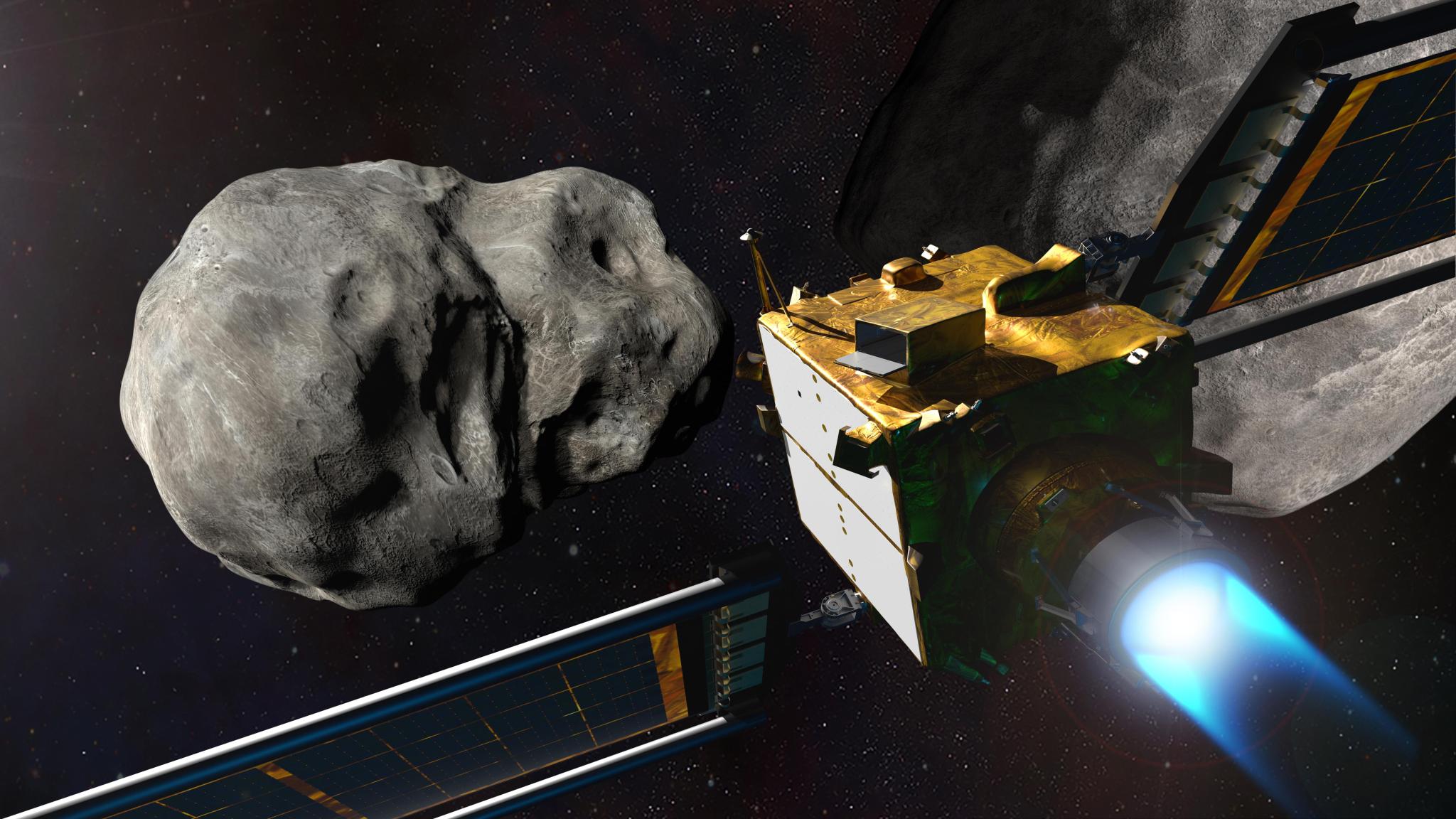
NASA’s DART Asteroid Deflection Mission Successfully Alters Asteroid Orbit

NASA’s DART Asteroid Deflection Mission Successfully Alters Asteroid Orbit

NASA’s groundbreaking Double Asteroid Redirection Test (DART) has become one of the most successful planetary defense experiments in history, with scientists confirming that the spacecraft’s impact on an asteroid altered the object’s orbit around the Sun — a key proof of concept for humanity’s ability to protect Earth from potential hazardous asteroids. The mission, which…

Read More
Deep‑Underground Neutrino Observatory Advances Hunt for “Ghost Particles” From Dying Stars

Deep‑Underground Neutrino Observatory Advances Hunt for “Ghost Particles” From Dying Stars

Scientists around the world are advancing the search for some of the universe’s most elusive phenomena — high‑energy particles born in extreme cosmic events — by expanding the capabilities of deep underground observatories designed to detect neutrinos, often dubbed “ghost particles” for their ability to pass through matter almost entirely undetected. These unique detectors are…

Read More
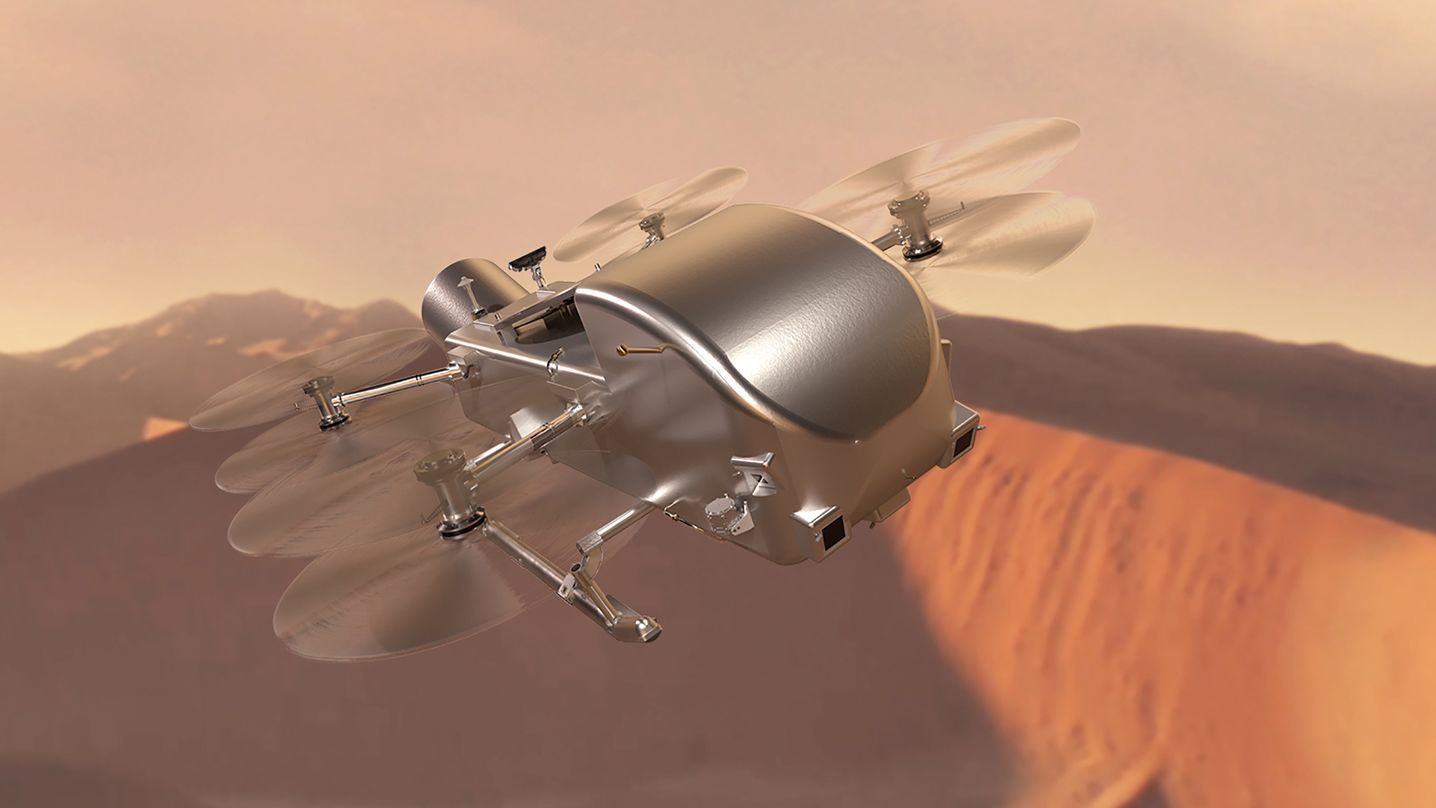
NASA Begins Building Nuclear‑Powered Dragonfly Drone for Titan Mission

NASA Begins Building Nuclear‑Powered Dragonfly Drone for Titan Mission

NASA has moved ahead with the construction phase of its ambitious Dragonfly mission, a first‑of‑its‑kind nuclear‑powered robotic drone designed to explore the surface of Saturn’s largest moon, Titan. The aerospace agency announced that the drone’s rotorcraft elements are now entering a critical integration and testing stage, marking a significant milestone in the mission’s timeline as…

Read More
Scientists Create First-Ever Hexagonal Diamond Harder Than Natural Diamond

Scientists Create First-Ever Hexagonal Diamond Harder Than Natural Diamond

In a groundbreaking development that could reshape materials science, researchers have announced the creation of a rare form of diamond known as a “hexagonal diamond,” which is believed to be even harder than conventional diamonds. The discovery has sparked excitement across the scientific community, with potential implications for industries ranging from manufacturing to space exploration….

Read More