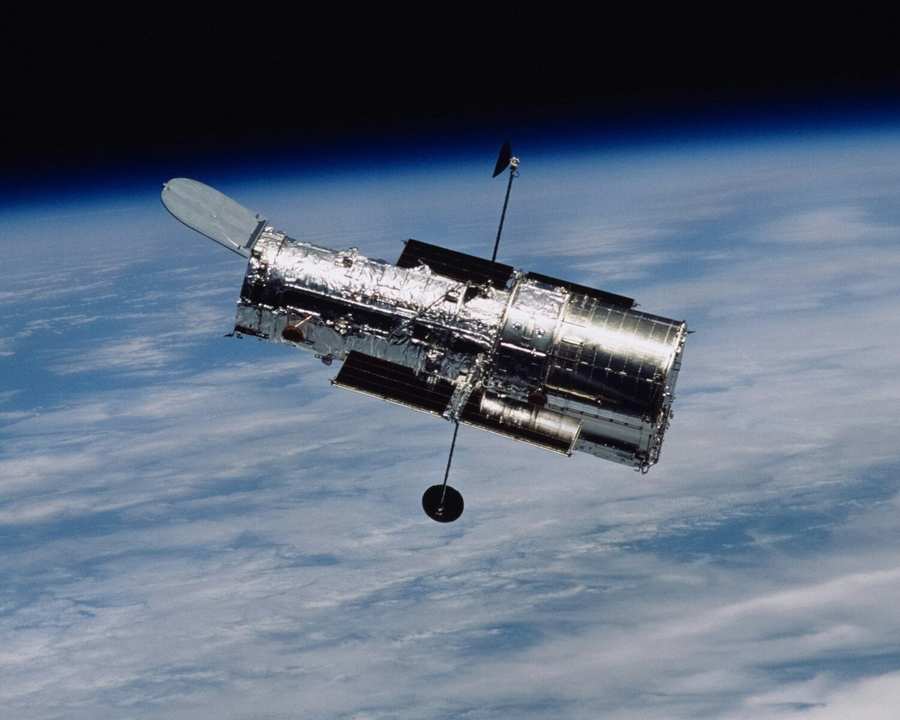
📡 In a remarkable demonstration of cosmic evolution in action, the Hubble Space Telescope has once again turned its powerful gaze toward one of space’s most iconic objects: the Crab Nebula. New observations released in late March 2026 reveal striking changes in the nebula’s structure over the past quarter‑century, offering scientists an unprecedented window into the dynamic aftermath of a stellar explosion.
🌀 A Cosmic Time Lapse: 25 Years in the Making
The Crab Nebula — located about 6,500 light‑years away in the constellation Taurus — is the remnant of a supernova explosion first observed by Earth’s astronomers nearly 1,000 years ago. Hubble first imaged the full nebula in 1999. Now, scientists have compared those early detailed scans with newer images captured around 2024 using Hubble’s updated Wide Field Camera 3, documenting subtle but unmistakable changes in the nebula’s appearance over 25 years.
This long‑term comparison shows:
- Filaments and gas clouds expanding outward at millions of miles per hour
- Shifts in temperature, density, and chemical composition of the nebular gases
- Structural evolution driven by the central pulsar’s energy — the rapidly spinning neutron star left after the supernova explosion
Astronomers highlight that such changes are usually imperceptible on human timescales, but Hubble’s longevity uniquely enables direct observation of the nebula’s growth and transformation.
🔭 What the New Images Reveal
Key changes documented by Hubble:
| Feature | 1999 | 2024 |
|---|---|---|
| Gas filament positions | Inner | Expanded outward |
| Gas temperature gradients | Less defined | More complex structure |
| Nebula density variations | Balanced | More stratified |
| Visual detail clarity | High | Higher (with WFC3) |
These shifts reflect ongoing processes driven both by residual energy from the original explosion and by the intense magnetic and particle winds of the central pulsar.
🌟 The Story Behind the Nebula
The Crab Nebula’s underlying core is a pulsar — a dense, city‑sized neutron star spinning dozens of times per second. Its rapid rotation and powerful magnetic fields energize the surrounding gas, creating high‑velocity winds and rich filamentary structures. This central engine keeps the nebula glowing across the electromagnetic spectrum — from visible light to X‑rays and beyond.
While the Crab has been studied extensively for decades, this latest 25‑year comparison highlights its dynamic nature, contradicting the common perception of space as static or unchanging.
📷 Why This Matters
The fresh Hubble images not only serve as a breathtaking visual record but also crucially:
- Provide insights into the long‑term evolution of supernova remnants
- Help refine models of pulsar wind dynamics
- Enable astronomers to chart the lifecycle of stars and their remnants
- Complement observations by other space telescopes, including the James Webb Space Telescope in infrared wavelengths (which maps dust and deeper structures)
🧠 Scientist Perspectives
Astronomers involved in the research stress that Hubble’s enduring operation — decades beyond its original design life — makes this kind of long‑term study possible. Each new data point deepens our understanding of how complex astrophysical systems evolve over time.
“In contrast to the slow, steady backdrop of the night sky, the Crab Nebula moves and changes on human‑observable timescales,” said one researcher. “Each new observation adds to our picture of how energy flows through space after a star’s death.”
🌌 In Summary: A Living Nebula
This latest Hubble revisit underscores that the universe is not frozen — it’s vibrant, evolving, and full of motion even over decades. The Crab Nebula, once just a static image in textbooks, now stands as a living testament to stellar evolution, showcasing the beautiful and violent aftermath of cosmic catastrophe.