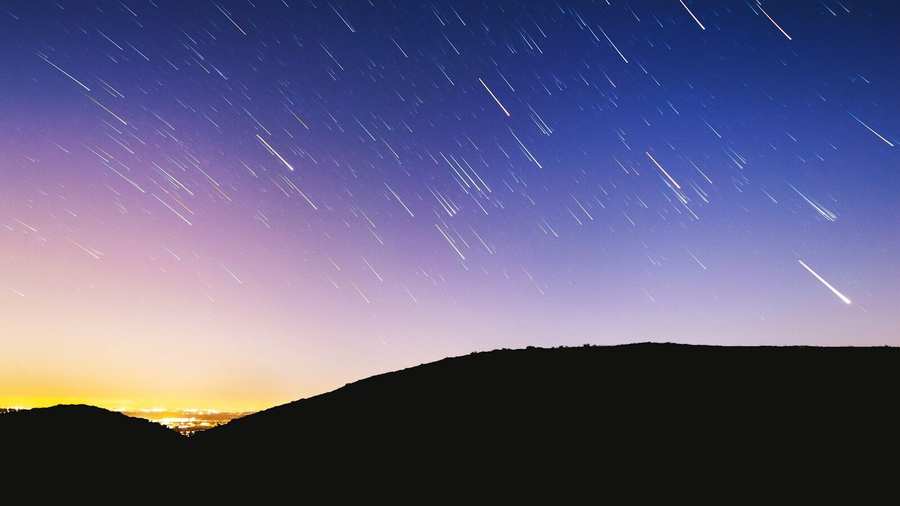
Skywatchers and scientists alike are buzzing as bright meteors—known as “fireballs” light up skies across the globe in early 2026. This surge in dramatic celestial events marks the peak of what astronomers call “fireball season,” a period when Earth encounters more meteoroids—small pieces of rock and debris from space—on its journey around the Sun.
🌠 What Is “Fireball Season”?
“Fireball season” refers to a stretch of late winter through early spring—particularly March and April—when increased numbers of bright meteors enter Earth’s atmosphere. While meteors occur year-round, seasonal geometry, Earth’s orbital motion, and residual comet debris contribute to elevated sightings of brighter meteors this time of year.
A “fireball” is simply a very bright meteor—often brighter than the planet Venus—that flashes sharply as space debris collides with our atmosphere at high speeds, heating up and glowing brightly before burning up or fragmenting.
🔭 Why Are We Seeing So Many Bright Meteors?
Recent reports and data indicate more frequent and highly visible events than expected, prompting both public fascination and scientific interest:
- Multiple fireball sightings across North America: People in Texas, Ohio, California, Michigan, and other states have witnessed spectacular streaks of light in the night sky in recent weeks.
- Unusual daytime fireballs: Rare daytime fireball events, including one visible over parts of the U.S., have sparked curiosity and investigation.
- NASA confirms the pattern: According to NASA, this surge aligns with seasonal expectations, though some of the brightness and number of sightings exceed ordinary levels.
Experts caution that the apparent increase in sightings may partly reflect greater detection and reporting, thanks to widespread camera use and social media sharing. Still, unusual fireballs that produce sonic booms or drop fragments suggest real — not just observational — activity.
🔥 Notable 2026 Fireball Events
Here’s a snapshot of significant fireball events observed this season:
| Date | Location | Description |
|---|---|---|
| March 17, 2026 | Ohio & surrounding U.S. states | A large meteor produced a loud sonic boom, visible across a wide region. |
| March 21, 2026 | Texas | A meteorite roughly the size of a cantaloupe crashed through a home roof after producing a dramatic fireball and boom. |
| Late March 2026 | Seattle & Pacific Northwest | A bright fireball streaked across skies, seen by over 100 witnesses. |
| Multiple Dates | U.S. and Europe | Broad-area sightings suggest widespread activity. |
🌌 Why Do Fireballs Occur More in Spring?
Astronomers point to a few contributing factors:
- Earth’s position in orbit: Around the vernal equinox, Earth passes through regions with more meteoroid debris streams, increasing the chance of bright meteors.
- Meteor showers: Annual meteor showers like the Lyrids (peaking around April 21–22) add to the fireball count as Earth encounters cometary dust.
- Random sporadic meteors: Not all fireballs belong to named showers; many are sporadic meteoroids that enter the atmosphere independently.
🌠 Viewing Tips for Fireball and Meteor Events
To increase your chances of spotting a fireball or meteor:
- Find a dark, clear-sky location away from light pollution.
- Look generally toward the sky opposite the Sun after dusk.
- Meteor shower peaks, like the Lyrids, often occur after midnight into predawn hours.
- Patience pays off—meteors are unpredictable and can appear randomly.
🧠 Scientists Weigh In
Researchers emphasize that while fireballs can be striking, they’re usually harmless. Most meteoroids burn up completely in the atmosphere, and only a tiny fraction reach the ground as meteorites. The recent uptick offers scientists an opportunity to collect data on the structure, composition, and origins of these space rocks.
🚀 What’s Ahead
The fireball season continues through April and into early May, with major meteor showers like the Lyrids set to produce predictable activity. These cosmic fireworks continue to remind us that Earth’s night sky is an ever-changing canvas of celestial motion.