
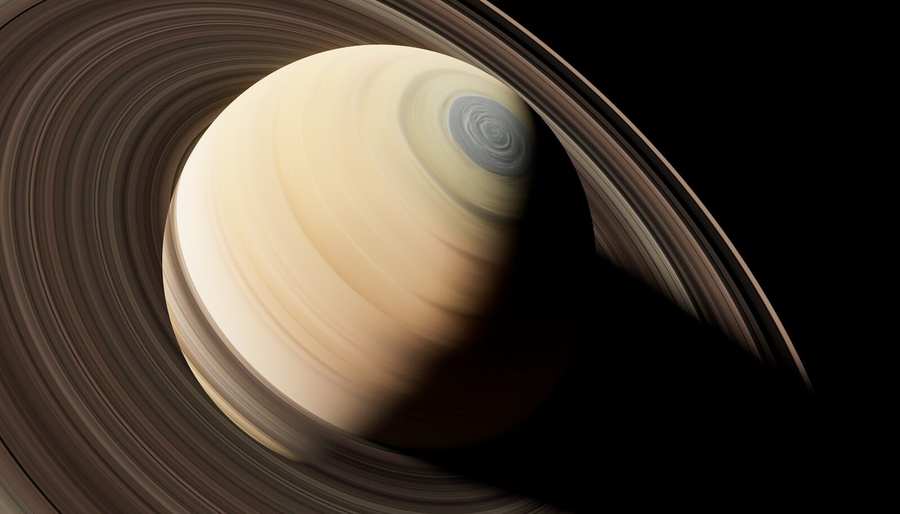
In a stunning achievement for planetary science, NASA’s James Webb Space Telescope (JWST) and the Hubble Space Telescope have teamed up to deliver the most comprehensive and detailed portrait of Saturn ever captured, revealing new insights into the planet’s complex atmosphere and iconic ring system. The combined observations, released in late March 2026, highlight Saturn in both infrared and visible light, giving scientists a richer understanding of its weather, structure, and seasonal changes.
🌌 A 360° View: Infrared + Visible Light
By merging data from two of astronomy’s most powerful observatories, researchers can “peel back” Saturn’s atmospheric layers like an onion:
- Infrared images from JWST penetrate deep into Saturn’s atmosphere, showing heat‑emitting structures, storms, and atmospheric dynamics invisible in visible light.
- Visible‑light images from Hubble reveal cloud bands, subtle color variations, and ring details that provide context for the infrared data.
This multi‑wavelength approach lets scientists observe features from the upper atmosphere down into deeper layers and better understand how the gas giant functions as a cohesive system.
🌀 What the New Views Reveal
| Feature | Visible Light (Hubble) | Infrared (JWST) |
|---|---|---|
| Cloud bands & color variations | Clear and detailed | Less prominent |
| Deeper atmospheric features | Hidden | Revealed |
| Ring structure | Bright, reflective | Glowing, high‑contrast |
| Storm activity | Moderate detail | Enhanced detail of deeper dynamics |
These observations also capture the transition of Saturn’s seasons as the planet nears its 2025 equinox, revealing phenomena such as powerful storms and layered atmospheric bands. The images showcase not just static features but dynamic processes shaping the gas giant over time.
🌠 Rings, Storms, and Unexpected Patterns
In the new images:
- Saturn’s icy rings appear brilliantly reflective in Webb’s infrared data, highlighting subtle density variations.
- The hexagonal jet stream at the planet’s north pole — a long‑lasting and mysterious atmospheric feature — is visible, offering insights into its structure just before entering a long seasonal winter dark period.
- Atmospheric chemistry and aerosol structures hint at auroral activity and complex wind systems that were previously difficult to resolve.
Astronomers emphasize that these joint observations extend and complement the legacy of past missions like Cassini, which studied Saturn up close from 1997–2017, by providing global, high‑resolution monitoring from Earth’s orbit and beyond.
🧠 Why This Matters
The images offer more than stunning visuals — they fuel real science:
- Enhanced models of atmospheric dynamics and seasonal change
- Better understanding of ring composition and evolution
- Clues about how giant planets in and beyond our solar system behave
By combining Hubble’s long‑term visible‑light monitoring with Webb’s unparalleled infrared sensitivity, scientists can build a more complete picture of Saturn’s atmospheric processes and seasonal cycles than ever before.
📡 Saturn in Context
Saturn is the sixth planet from the Sun and is well known for its remarkable ring system and gaseous composition. Studies of its atmosphere and dynamics help researchers understand not only our own solar system’s giant planets but also the many exoplanets being discovered around other stars.
🔭 Looking Forward
Future observations are expected to track Saturn’s atmospheric evolution as it continues its seasonal cycle into the 2030s. This collaborative approach between telescopes operating across different wavelengths — and with complementary strengths — underscores the power of multi‑observatory science in uncovering the secrets of distant worlds.