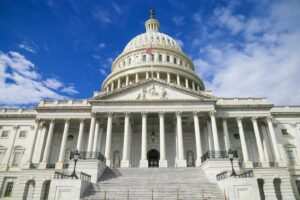

WASHINGTON, D.C. — In a bold move that has polarized the scientific community, the Trump administration officially released its fiscal year 2027 budget request today, Monday, April 6, 2026. The proposal outlines a dramatic realignment of federal priorities, seeking a historic $445 billion increase in defense spending while calling for deep, double-digit cuts to several non-defense agencies, including the National Science Foundation (NSF) and Health and Human Services (HHS).
Targeting the “Social Sciences”
The most controversial element of the proposal is the call to completely eliminate the Directorate for Social, Behavioral, and Economic Sciences (SBE) at the NSF. This directorate, which awarded over $154 million last year, funds critical research in fields ranging from cognitive science and linguistics to social psychology and economic theory.
White House officials argue that the cuts are necessary to streamline the government and eliminate “wasteful spending” that does not directly contribute to national security or industrial productivity. “Every dollar we spend must be an investment in American strength,” a spokesperson for the Office of Management and Budget (OMB) stated. “We are prioritizing hard engineering, computer science, and military superiority over social experiments.”
The ITIF Warning: A Risk of Disinvestment
The proposal has met with immediate pushback from industry watchdogs. The Information Technology and Innovation Foundation (ITIF) released a statement warning that outright disinvestment could weaken America’s long-term global competitiveness.
“American growth is slowing while global competitors are accelerating their R&D investments,” said Trelysa Long, a policy analyst at ITIF. “If we wind down social and behavioral research, those funds should at least be redirected to critical areas like AI and quantum computing. Simply cutting them altogether cedes the future to China and Europe.”
HHS and the 340B Overhaul
Beyond the NSF, the budget request seeks to reduce funding for the Department of Health and Human Services (HHS) by 12.5%. A key component of this plan involves moving the 340B Drug Pricing Program under the direct purview of the Centers for Medicare and Medicaid Services (CMS). Proponents say this move will increase transparency and lower costs for consumers, while healthcare providers warn it could strip essential funding from safety-net hospitals that rely on the program to serve low-income patients.
The Congressional Battle Ahead
The budget proposal now heads to a divided Congress, where it is expected to face fierce resistance from Democrats and some moderate Republicans. Opponents call the plan a “bleak and unacceptable” view of national priorities that sacrifices human well-being and fundamental science for a “war-time” ledger.
As the 2026 midterm season heats up, the debate over this “Innovation Pivot” will likely serve as a central flashpoint for candidates vying to define the nation’s path forward in an increasingly competitive—and volatile—global landscape.