WASHINGTON, D.C. — As the joint U.S.-Israeli military operation against Iran enters its sixth week, Pentagon officials and Israeli Defense Forces (IDF) leadership have signaled a significant shift in strategy. Today, Monday, April 6, 2026, reports emerged that the allied forces are considering a “ground component” to supplement the ongoing aerial bombardment, aimed at permanently neutralizing Iran’s “immune” underground missile and nuclear facilities.
Beyond the Air Campaign
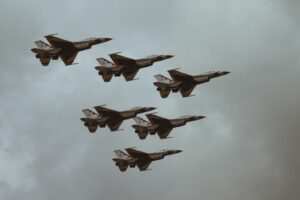
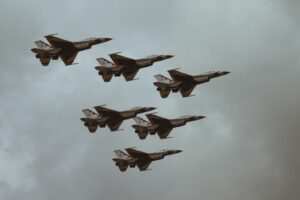
Since the strikes began on February 28, 2026, the U.S. and Israel have successfully degraded much of Iran’s surface-level air defenses and command-and-control centers. However, deep-set bunkers—some buried hundreds of feet beneath mountain ranges—remain a primary concern.
“The air campaign has achieved its initial objectives of suppressing enemy fire and establishing air superiority,” a senior defense official stated. “But to ensure the total ‘unconditional surrender’ of the regime’s nuclear ambitions, a physical presence at specific high-value sites may be required.”
The “Unconditional Surrender” Mandate
President Trump has maintained a hardline stance throughout the conflict, repeatedly stating that the U.S. will only accept Iran’s complete capitulation. Following the successful rescue of two downed American airmen earlier this month, the White House has felt emboldened to push for a definitive end to the Iranian threat.
The President’s “Bridge Day” ultimatum—threatening to destroy five multimillion-dollar civilian bridges if the Strait of Hormuz is not reopened by Tuesday—serves as the final diplomatic warning before this potential escalation into ground operations.
Regional and Global Fallout
The prospect of Western boots on Iranian soil has sent shockwaves through the international community. While the UK has authorized the use of its bases in Diego Garcia and Cyprus for “defensive purposes,” major powers like China and Russia have called for an immediate de-escalation. Chinese Foreign Minister Wang Yi reportedly spoke with his Russian counterpart today to discuss “upholding fairness” and preventing a total regional collapse.
Domestically, the U.S. is bracing for the impact. With more troops already being deployed to the region, the “war-time” economy is tightening. Oil prices have remained stubbornly high, and the threat of Iranian counter-strikes against U.S. bases in neighboring Arab states remains at an all-time high.
The Resistance Within
Adding to the complexity, President Trump recently confirmed that the U.S. had been arming Iranian dissidents and Kurdish groups weeks before the war officially began. This internal pressure, combined with the weakened state of Iran’s regional allies (such as Hezbollah in Lebanon), has led some analysts to believe the regime is more vulnerable than ever to a coordinated ground and air assault.