
Donald Trump has ignited international debate after making a blunt statement regarding the ongoing Iran conflict and global oil supply. Speaking at a press briefing in Washington D.C., Trump suggested that countries facing energy shortages should “get their own oil,” rather than relying on the United States for protection or support in the Gulf region.
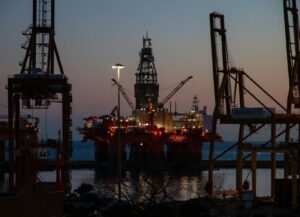
The remarks come amid escalating tensions around the Strait of Hormuz, where repeated attacks on tankers and military assets have raised fears of a prolonged disruption to the world’s oil supply. Global leaders reacted with concern, interpreting Trump’s statement as a potential signal of reduced U.S. involvement in securing international energy routes.
European allies, particularly Germany, France, and the United Kingdom, were quick to respond. Officials have expressed worry that a diminished U.S. commitment could leave them vulnerable to economic and energy shocks, with oil prices already surging due to ongoing Gulf instability.
Domestically, Trump’s comments received mixed reactions. Supporters praised his “America First” approach, highlighting the need to reduce U.S. military entanglement abroad. Critics, however, warned that such rhetoric could strain diplomatic relations, embolden Iran, and exacerbate global instability.
Energy markets reacted immediately. Oil futures jumped as investors digested the implications of potentially lower U.S. involvement in Gulf security. Analysts warned that if military support diminishes, countries dependent on oil imports could face a severe economic impact.
Diplomatic channels are reportedly working overtime to manage the fallout. China and Pakistan, who have proposed a ceasefire framework, and the United Nations, which continues to advocate for regional de-escalation, are urging restraint from all parties.
Trump’s statement underscores the increasing tension between U.S. strategic priorities and global energy security. While it may appeal to domestic audiences concerned about foreign policy overreach, it has raised alarms among allies and energy-dependent nations worldwide.
As the situation evolves, one question dominates: will the U.S. recalibrate its role in the Middle East, or will rhetoric like this deepen global uncertainty amid a volatile Iran conflict?